
By Janet Walden, Director of Strategic Initiatives, Wellroot Family Services
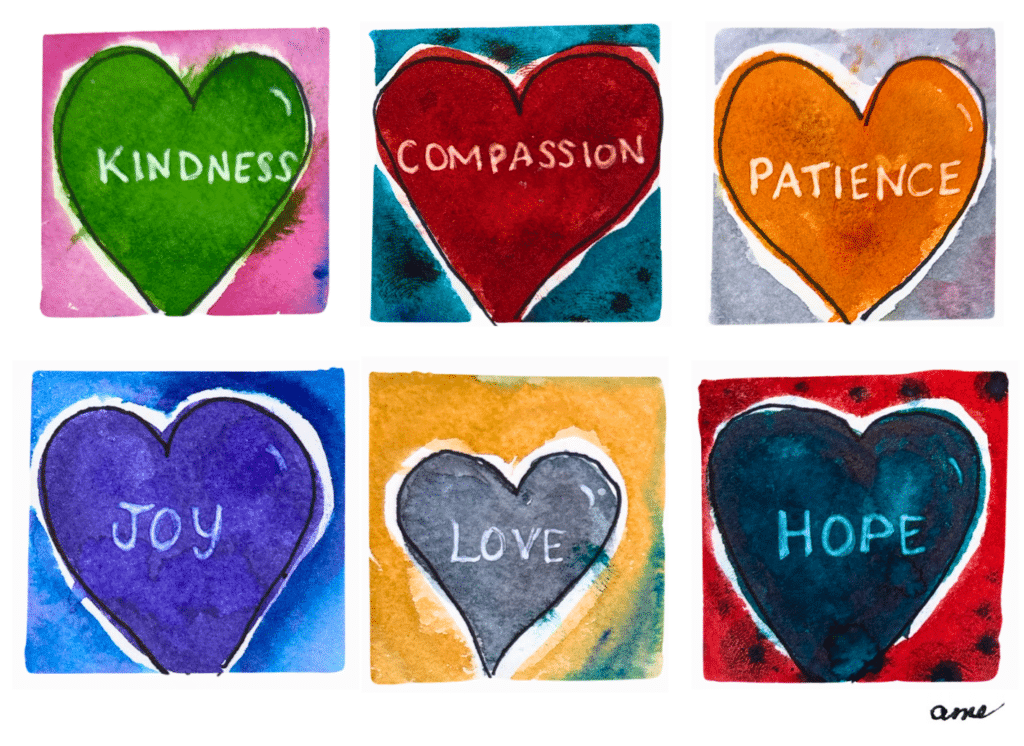
Artwork created by Rev. April McGlothin-Eller
Love shows up in many forms. Sometimes it’s a moment of celebration, but more often, it’s something quieter: the steady presence of someone who chooses to stay connected.
Throughout my career, especially during my years serving as executive director of CASA programs, I was surrounded by mentors who offered that kind of love in action. They shaped the way I lead, the way I listen, and the way I show up for others. Those were people who didn’t just guide me professionally; they invested in me personally. They asked about my family, checked in during hard seasons, celebrated victories big and small, and reminded me that I wasn’t walking alone.
When I retired from CASA, something shifted. For the first time in decades, the natural rhythms of daily connection paused. No more hallway conversations, volunteer drop-ins, or staff collaborations. I realized how easily a person can slip into isolation—not for lack of people who care, but simply because the structure that held our relationships together changes.
What remained, though, were the friendships that had always been rooted in something deeper. My mentors and I continued to reach out to one another. We text when we haven’t heard from each other. We schedule time to talk even when life gets busy. We notice, and we stay accountable to maintaining the threads that have held us for so long.
That experience taught me something important:
Connection isn’t automatic. It’s chosen. And chosen connection is a form of love.
It also reminded me why I wasn’t ready to step away from this work entirely. After a brief retirement, I found myself drawn to Wellroot Family Services—drawn to the mission, the heart, and the belief that families thrive when they are surrounded by people who care.
At Wellroot, we believe that connection is more than a feeling—it’s a protective factor.
When families have strong, reliable support networks, they are better equipped to navigate challenges, reduce stress, and create safe, nurturing environments for their children. Research and experience tell us that isolation can amplify risk, while relationships buffer adversity and build resilience.
That’s why our programs do more than provide services—they create pathways to belonging. The impact is clear: families linked to community supports experience greater stability, improved health outcomes, and stronger relationships. When we invest in connection, we invest in futures.
What I’ve learned personally and professionally is this: connection is one of the greatest gifts we can offer each other. It doesn’t require grand gestures. It requires presence, intention, and the belief that every person deserves to feel seen and valued.
So this month, as we reflect on love in its many forms, I’m thinking about the kind that stays—the kind that transcends life transitions, across roles, and across seasons. The kind that weaves us together and strengthens us from the inside out.
My hope is that we all take a moment to nurture the relationships that sustain us and to extend that same steady connection to someone who may need it. A simple “How are you?” A moment of listening. A reminder that they’re not alone. These gestures may seem small, but they can make a world of difference. They help us feel grounded, supported, and connected. That sense of belonging is what helps all of us grow stronger and helps us build the kind of community where everyone can thrive.